
In short
CNC machining is used where the as-cast feature cannot reliably meet the part’s fit, alignment, sealing or finish requirements. Common candidates are bearing bores, tapped holes, sealing faces and locating pads. To decide which ones need machining, start with what the part mates to and how each critical feature will be inspected.
Which features are usually machined?
- Bearing and locating bores. Call out the required fit and the position of the bore relative to its mounting face or another feature. A bore can meet its size tolerance and still be out of position.
- Tapped holes. Specify thread size, depth and whether the hole is blind or through. Tell the supplier what the fastener does, especially if engagement length or alignment affects assembly.
- Sealing faces. Identify the full gasket or seal contact area. State the relevant flatness, finish and any leak test you expect. This helps the supplier assess the casting and the machining route together.
- Mounting and datum pads. Mark the pads that locate the part in assembly and any relationship between them. Use the drawing to distinguish the surfaces that must be machined from the rest of the casting.
What does that look like on a housing?
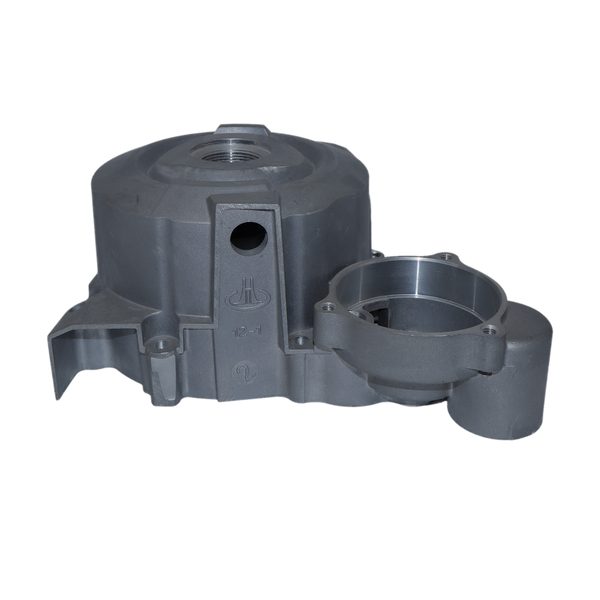
The casting shown below has a large circular opening and an adjoining enclosure. On a housing with this geometry, the buyer and supplier would check whether the large bore locates a bearing, which face locates the housing in its mating assembly, and how bore position should be inspected. The drawing and assembly requirements settle those questions.
How do the datum and fixture affect the result?
A datum gives the drawing and inspection a common reference. The first machining setup still needs surfaces that can locate the raw casting repeatably. A supplier should explain how the casting will be held for that setup, how the required datum is established, and whether related features can be machined or checked from the same reference. This is easiest to agree before tooling, while the design can still accommodate locating pads and machining stock.
For a first-article review, check the dimension report against the same drawing revision and datum scheme. Ask the supplier to confirm the measurement method for any feature that governs fit or assembly. See how inspection is planned
What should I send for a machining quote?
Send the drawing revision, the required material or casting condition, the expected quantity, and the finish and inspection requirements. On an annotated drawing, circle the features that affect assembly or sealing. If you supply the raw castings, tell the supplier where the machining stock is and whether parts or dimensional records are available for review.
Have a casting to review? Explore CNC machining for die cast parts or request a machining quote. For a confidential design, request an NDA before sharing the drawing.
Technical reference · NADCA Product Specification Standards overview