
In short
A die casting design-for-manufacturing (DFM) review identifies changes to the part or process before the mold is cut. Start with the most important mating and cosmetic features. Then review wall transitions, draft and ejection, parting-line placement, and stock for machining. Close the review by deciding who updates the drawing and what must be checked on the first samples.
What should be checked before the mold is cut?
- Wall sections and transitions. Flag thick-to-thin changes and isolated heavy sections. Ask how they affect fill and cooling, and where a more gradual transition is practical.
- Ribs, bosses and corner radii. Review ribs and mounting bosses together with the adjacent wall. Ask whether the junction needs a radius or whether a thick mass can be reduced while keeping the required function.
- Draft and ejection. Check the direction in which the casting leaves the tool. Call out faces with limited draft, hard-to-release features and areas where ejector marks matter. Confirm which features may require a slide or another tooling decision.
- Parting line and appearance. Mark areas where a witness line, ejector mark or trimmed gate would interfere with a seal, assembly fit or visible finish. Give the supplier a clear view of which surfaces have appearance requirements.
- Machining stock and datums. Mark critical bores, threads and sealing faces. Agree where material will remain for machining and how the raw casting will be located before the first cut. Read the guide to CNC machining die cast features
- Trial parts and acceptance. Agree which dimensions, visual zones and tests are required at first-article review, and which records should accompany production shipments. See the quality and inspection process
What does an actionable DFM comment look like?
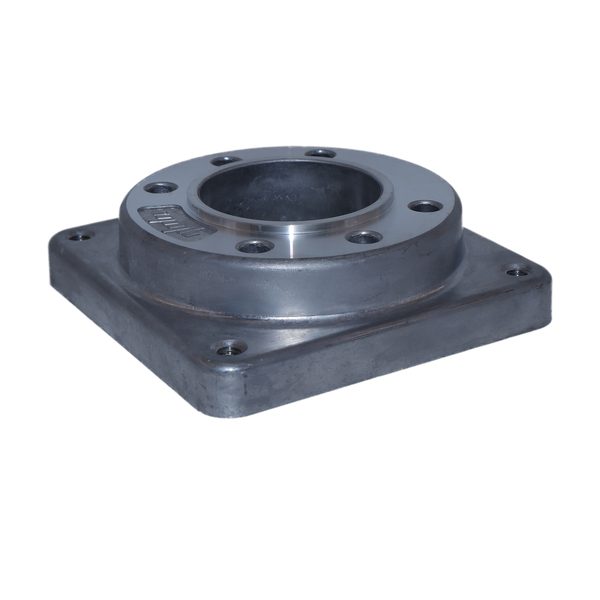
Consider the flanged part shown below. The central bore, flange face and bolt pattern serve different functions. A useful DFM comment asks which surface locates the housing in the assembly, then shows where the parting line or a trimming mark might interfere with that surface. The drawing owner can approve a change, revise the drawing or keep the requirement and ask the supplier to explain the resulting process.
What should come back before tooling is released?
Ask for a marked-up drawing or feature list showing open decisions, who owns each decision and which drawing revision will be used for the tool. If a change affects fit, appearance or inspection, confirm it on the revised drawing before releasing tooling. A dimensioned 2D drawing can start the conversation. A matching 3D model makes it easier to review wall sections, ribs and tool access.
Ready for a drawing review? See Lingrong’s aluminum die casting process or start an aluminum die casting RFQ.
Technical references · NADCA die casting design FAQ · NADCA Product Specification Standards overview